Excavation is one of the earliest and most foundational steps in nearly any construction project, whether it is a new home build, a commercial development, or a significant addition to an existing structure. Before framing or foundation work can begin, the land itself needs to be properly assessed, cleared, and shaped to support the project ahead. In Portland, where terrain varies from flat urban lots to sloped properties in areas like the West Hills, excavation work carries some regional considerations worth understanding.
This article walks through the general, informational basics of what Excavating Contractor Portland involves, why it matters, and the questions that most commonly come up for property owners learning about this early stage of construction.
What Excavation Actually Involves
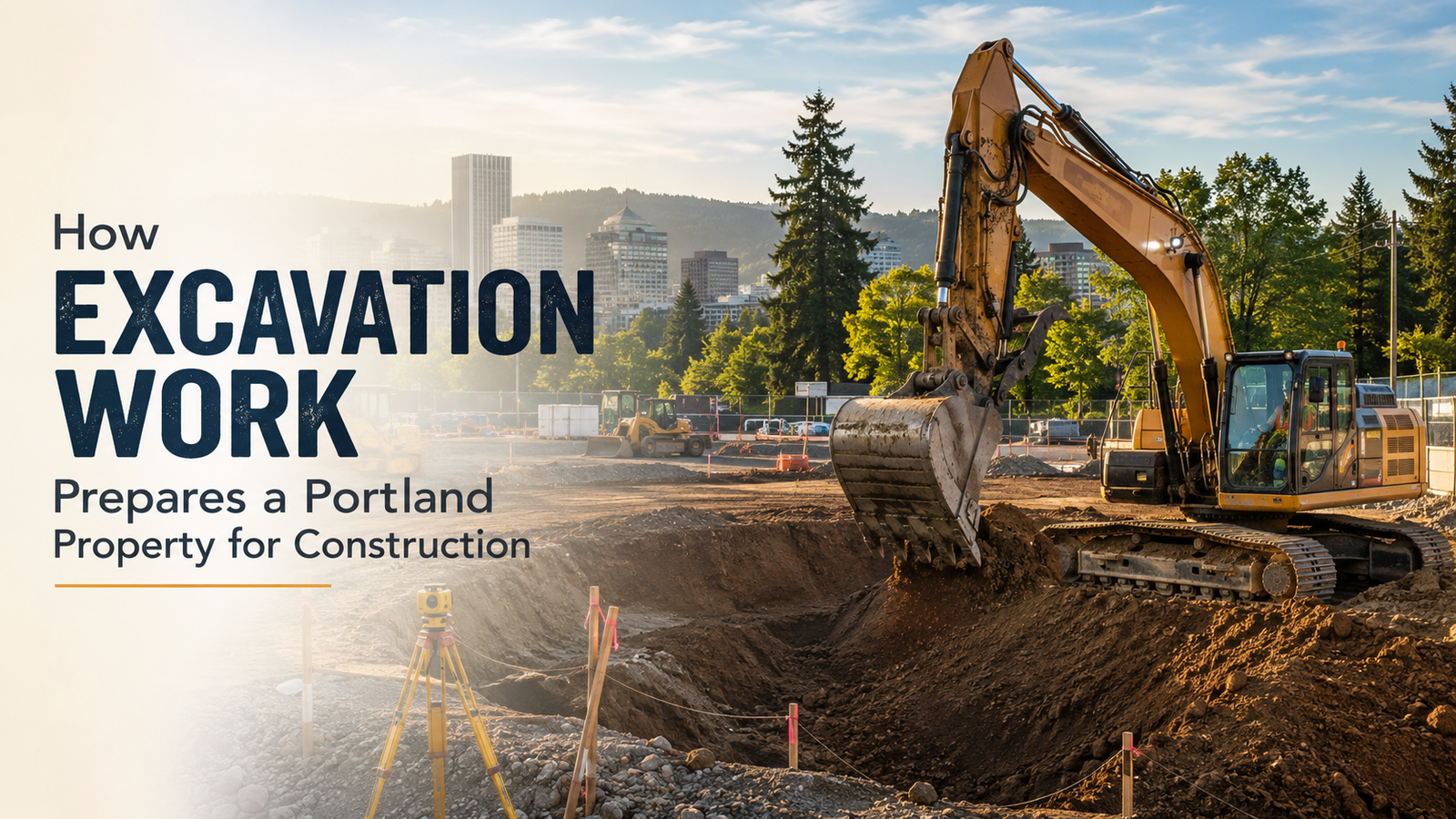
Excavation is the process of digging and removing soil, rock, and other material from a job site to prepare it for construction. This can include digging foundations, trenches for utility lines, or larger areas for a basement or lower level. The scope of excavation work depends heavily on the specific project, with a small addition requiring far less earth-moving than a new ground-up structure.
Excavation is closely related to but distinct from grading, which is the process of shaping and leveling land to establish the correct slope and elevation for construction. Most projects involve both excavation and grading working together as part of overall site preparation.
Why Portland’s Terrain Makes Site Assessment Important
Portland’s geography includes everything from level lots in neighborhoods along the Willamette River to steeply sloped properties in the West Hills and other elevated areas of the city. This variation means that excavation planning has to account for the specific characteristics of a given site, including slope, soil composition, and drainage patterns, before work can begin safely and effectively.
Sloped properties in particular require careful excavation planning to manage water runoff and prevent erosion both during and after construction, since improperly managed excavation on a slope can lead to drainage problems or soil instability that affects the finished project.
The Role of Utility Location Before Digging Begins
Before any excavation work starts, locating existing underground utilities, including gas, water, sewer, and electrical lines, is a standard and essential step. Striking an unmarked utility line during excavation can cause serious safety hazards and significant project delays, which is why utility locating services are typically arranged well in advance of any digging.
This step is especially important on established Portland lots, many of which have decades of underground infrastructure that may not always match older property records exactly, making a current utility locate an important part of responsible site preparation.
Frequently Asked Questions About Excavation
What is the difference between excavation and grading? Excavation involves digging and removing material to create depth and space, such as for a foundation, while grading involves shaping and leveling the surrounding land to establish proper slope and drainage.
How does soil type affect excavation work? Different soil types, from sandy soil to dense clay or rocky ground, require different equipment and techniques, and soil composition can also affect how stable an excavated area remains before construction proceeds.
Is excavation affected by rainy weather? Yes, wet conditions can make soil harder to work with and increase the risk of instability in an open excavation, which is one reason excavation timing is often planned around drier periods of the year where possible.
Why is topsoil sometimes set aside during excavation rather than hauled away? Topsoil is often nutrient-rich and valuable for later landscaping, so many projects stockpile it on site for reuse once construction is complete rather than disposing of it.
How Weather Affects Excavation Scheduling in the Pacific Northwest
Portland’s wet season, generally running from late fall through early spring, is one of the more significant regional factors influencing excavation scheduling. Saturated soil is more difficult to excavate cleanly and can be less stable once exposed, which is why much excavation work in the region is planned for the drier months when practical, particularly for projects involving significant earth-moving.
For projects that do need to proceed during wetter periods, additional measures like temporary drainage management and erosion control are often incorporated into the plan to keep the site stable and workable.
Excavation for Utility Trenches and Site Access
Beyond foundation work, excavation is also commonly needed to install or extend utility trenches for water, sewer, and electrical connections, as well as to prepare access routes and driveways as part of a broader construction project. Each of these tasks requires its own planning around depth, utility clearance, and how the trench will be backfilled and compacted once the work is complete.
Proper compaction after trenching is an important detail that is sometimes overlooked; inadequately compacted backfill can lead to settling and surface unevenness above a trench line months or years after a project is finished.
Why Professional Excavation Planning Matters
Excavation is physically demanding and carries real safety risks, including the possibility of soil collapse in deeper excavations and the danger of striking unmarked utilities. For these reasons, excavation is generally not considered a suitable do-it-yourself project, even for smaller residential jobs, and is typically handled by experienced professionals working with appropriate equipment and safety protocols.
Understanding these basics, how excavation differs from grading, why utility location matters, and how Portland’s terrain and climate influence planning, gives property owners a clearer picture of why this early stage of construction has such a significant impact on how the rest of a project unfolds.
How Soil Composition Varies Across the Portland Area
Soil conditions across Portland are not uniform. Areas closer to the Willamette and Columbia rivers often have more sedimentary, sometimes sandy or silty soil, while properties in the West Hills can encounter denser clay or basalt rock closer to the surface. These differences directly affect how excavation equipment is selected and how much time a project should budget for site preparation, since rockier terrain generally takes longer to excavate than looser, sedimentary soil.
A general soil assessment early in the planning process, sometimes through test pits or a geotechnical evaluation for larger projects, helps set realistic expectations for how straightforward or involved the excavation phase of a given project is likely to be.
Erosion Control During and After Excavation
Once soil is exposed during excavation, it becomes more vulnerable to erosion, particularly during Portland’s rainy months. Erosion control measures, such as silt fencing, temporary ground covers, and managed runoff paths, are commonly used to prevent exposed soil from washing into storm drains or onto neighboring properties while a site remains open during construction.
These measures are not just a matter of good practice; many jurisdictions, including areas within Portland, have specific erosion control requirements tied to permits for projects involving significant excavation, making this an important compliance consideration as well as a practical one.
Equipment Selection Based on Site Constraints
Portland’s urban lots, particularly in denser inner neighborhoods, often present limited access for large excavation equipment compared to more open suburban or rural sites. Narrow side yards, mature trees close to a foundation, and tight spacing between neighboring homes all factor into what size and type of equipment can realistically be used on a given project, sometimes requiring smaller, more maneuverable machinery even if it means a longer overall timeline for the excavation phase.
This is one of the more practical, site-specific considerations that shapes how an excavation plan comes together, since the right equipment for a spacious suburban lot may simply not fit or maneuver safely on a compact urban infill site. Compact excavators and other smaller-footprint machines have become increasingly common on Portland’s infill projects for exactly this reason, allowing excavation work to proceed even on lots with very limited side-yard clearance.
Backfilling and Compaction After Excavation
Once excavation work is complete and any necessary structural or utility work has been installed, backfilling the excavated area properly is just as important as the digging itself. Backfill material needs to be compacted in layers to prevent future settling, since loosely backfilled soil can gradually compress over months or years, leading to surface unevenness above the excavated area.
This final stage of the excavation process is sometimes overlooked in general discussions about site work, but it plays a significant role in how stable and level a finished surface, whether it is a driveway, a foundation perimeter, or a backfilled utility trench, remains over the long term.
How Excavation Fits Into the Broader Construction Timeline
Excavation is typically one of the very first physical activities on a job site, but its influence extends well beyond its own timeline. A well-executed excavation phase, with accurate grading and properly compacted backfill, sets the stage for a smoother foundation pour, fewer drainage complications later, and a more predictable schedule for the framing and finishing work that follows.
Because of this outsized influence on everything that comes after it, excavation is generally treated as a phase worth getting right the first time, even if that means a slightly longer timeline upfront to account for careful soil assessment, utility location, and weather-appropriate scheduling.